You turn your back on the stove for literally fifteen seconds to chop a clove of garlic or grab a colander from the cabinet. Suddenly, you hear that terrifying, violent hiss: a thick, volcanic froth of starchy boiling water has erupted over the rim of your pot, cascading across your burners, sizzling violently against the heating elements, and creating a burnt crust that will take an hour to scrape off.
We have all scrambled in sheer panic to yank the pot off the burner, waving a kitchen towel through clouds of starchy steam. It happens when boiling pasta, potatoes, beans, or rice. You turn the heat down, but the moment you put the lid back on, the pot threatens to erupt again.
Why does plain boiling water never foam over, but the minute you add pasta, it turns into an unstoppable volcano? And does the old trick of resting a wooden spoon across the pot actually work, or is it an old wives’ tale? Here is the real food physics behind pot boil-overs, and the two methods that prevent stovetop disasters forever.
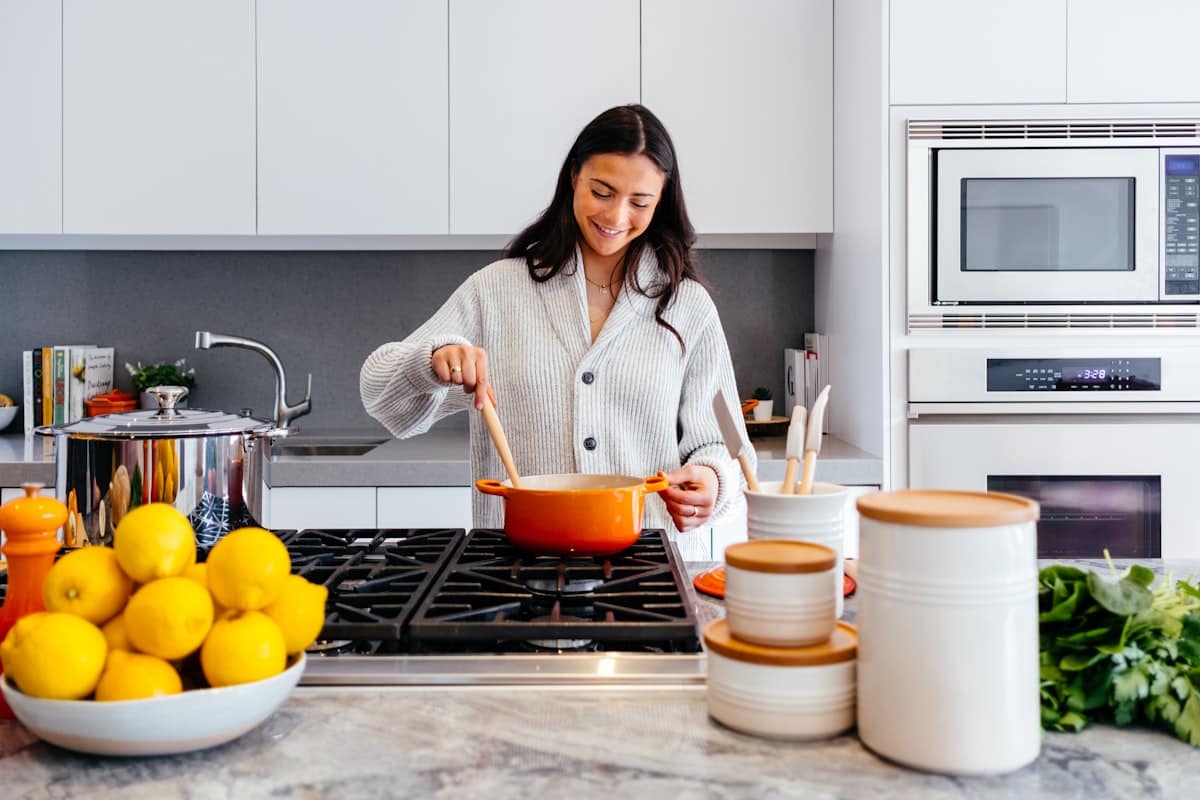
The Physics of Foam: Why Starch Creates Volcanic Bubbles
When you boil pure tap water, steam bubbles rise to the surface and burst almost instantaneously. The surface tension of pure water is not strong enough to hold steam trapped in place, so the water level never rises.
However, when you drop pasta, potatoes, or rice into boiling water, starch granules (specifically amylose and amylopectin) swell, burst, and leach into the water. In addition, protein chains from wheat flour dissolve into the liquid.
These starches and proteins act as powerful surfactants. They form a tough, flexible, elastic film that surrounds every rising steam bubble. Instead of popping upon reaching the surface, the bubbles stack on top of each other in a stable, resilient foam lattice. As heat continues to generate steam from the bottom of the pot, this mountain of foam rises up the pot walls until it spills over the rim.
Hack 1: The Wooden Spoon Across the Rim (How It Actually Works)
Does laying a dry wooden spoon across the center of the pot really stop foam? Yes, but with scientific limitations!
- Principle 1 (Temperature Drop): Wood is a thermal insulator and stays relatively cool compared to the boiling 212°F (100°C) water. When the boiling starch foam rises and contacts the cooler surface of the spoon, the trapped steam inside the bubble instantly condenses back into liquid water, causing the bubble to collapse.
- Principle 2 (Hydrophobic Resistance): Dry wood is naturally hydrophobic (water-repelling). When the watery starch film touches the dry, rough wood grain, the surface tension of the bubble is destabilized, popping it on contact.
The Trap: The wooden spoon trick only works if the spoon remains dry and relatively cool! If you leave the spoon sitting over a raging boil for ten minutes until the wood is scalding hot and soaked through with water, the foam will climb right over it. It is an emergency brake for moderate boils, not a permanent shield for maximum heat.
Hack 2: The Single Drop of Oil (The Ultimate Scientific Fix)
If you want a 100% foolproof, permanent barrier that prevents foam from ever forming even at a vigorous boil, use the lipid surface tension breaker:
- Before or during boiling, add 1/2 teaspoon of butter, olive oil, or neutral oil directly to the pot of pasta water.
- Fats are powerful anti-foaming agents. Because oil is lighter than water, it forms a microscopic lipid film across the liquid surface.
- When rising steam bubbles try to form elastic starch pockets, the fat molecules immediately disrupt and puncture the starch-protein bonds. The bubbles are chemically incapable of forming a stable foam lattice. The water boils cleanly with zero foam rising up the sides!
Step-by-Step Boil-Over Prevention
Step 1: Choose the Right Pot Size
Never fill a pot more than two-thirds full of water. Pasta needs room to dance, and boiling water expands.
Step 2: Add 1/2 Teaspoon of Fat
Add 1/2 teaspoon of olive oil or a tiny pat of butter to the water once it reaches a boil. This breaks surface tension without making pasta greasy.
Step 3: Lay a Dry Wooden Spoon Across the Rim
Rest a clean, dry wooden spoon horizontally across the middle of the pot rim as a backup barrier.
Step 4: Keep the Lid Off or Ajar
Never put a tight lid on a pot of boiling pasta! Trapped steam builds internal pressure and guarantees an eruption. Leave the lid completely off or cocked at an angle.
5 Traps to Avoid
- Using Metal Spoons or Silicone Spatulas Across the Rim: Metal conducts heat instantly and becomes scorching hot, failing to pop bubbles. Silicone does not absorb surface energy like dry wood. Always use genuine, untreated wooden spoons.
- Leaving the Lid Fully On: Putting a tight lid on boiling potatoes or pasta traps steam pressure, accelerating foam rise within 10 seconds. Always leave pasta pots uncovered.
- Dumping Half a Cup of Oil into Pasta Water: You only need 1/2 teaspoon of fat to break surface tension. Dumping tablespoons of oil will coat the pasta, preventing tomato or cream sauces from adhering properly to the noodles later!
- Forgetting to Stir Immediately After Dropping Pasta: Starch leaches most heavily in the first 60 seconds of cooking. Stir the pot vigorously with a wooden spoon the second noodles hit the water to prevent clumps on the bottom.
- Boiling on Maximum High the Entire Time: Once your water reaches a rolling boil and you drop your food, reduce the burner from High to Medium-High. As long as water is simmering at 212°F, it is cooking at maximum speed; excess heat just creates violent steam.
The 15-Minute Weeknight Dinner Matrix
Stop wondering what to cook tonight. Get 20 modular, test-kitchen meals ready in 15 minutes or less from 5 pantry staples—with dual metric/US measurements & flavor grids.
Every recipe on QuickRecipeAI is independently developed, stopwatch-timed, and flavor-tested at least 3 times in home kitchens by Safi A. Calibrated with dual metric/US measurements and validated against USDA FoodData Central. Review Our Test Kitchen Standards & Testing Methodology →
OXO Good Grips Solid Natural Beechwood Large Cooking Spoon
Why Safi A Recommends It: Metal spoons conduct heat rapidly and burn boiling foam, while plastic spoons can warp. Solid, unlacquered natural beechwood remains cool and hydrophobic across the rim, destabilizing and popping starch-protein steam bubbles on contact.
FTC Disclosure: As an Amazon Associate, QuickRecipeAI earns from qualifying purchases at no extra cost to you. We only recommend equipment rigorously tested and approved in our test kitchen.
Quick Hack Card: Stop Pots Boiling Over
Use wooden spoon thermal cooling and 1/2 tsp of oil to eliminate messy stovetop boil-overs forever.
Prep Time: 5 secs | Mess Saved: 100% | Skill Level: Beginner | Author: Safi A
Tools & Supplies
- Dry wooden spoon
- 1/2 tsp cooking oil or butter
- Saucepan / stockpot
Summary Steps
- Add 1/2 tsp oil or butter to boiling pasta water to chemically break starch bubble tension.
- Lay a dry wooden spoon across the center of the pot rim.
- Cook pasta with the lid off or ajar.
- Reduce heat slightly to medium-high to maintain active boil without violent froth.