
Why Peach Cobbler Filling Turns Soupy: The Sugar Maceration Reduction and Cold Buttermilk Biscuit Steam Secret
⚡ Quick Recipe Jump to Recipe Print Recipe Few desserts in the American culinary canon evoke the warm nostalgia of a Southern summer […]
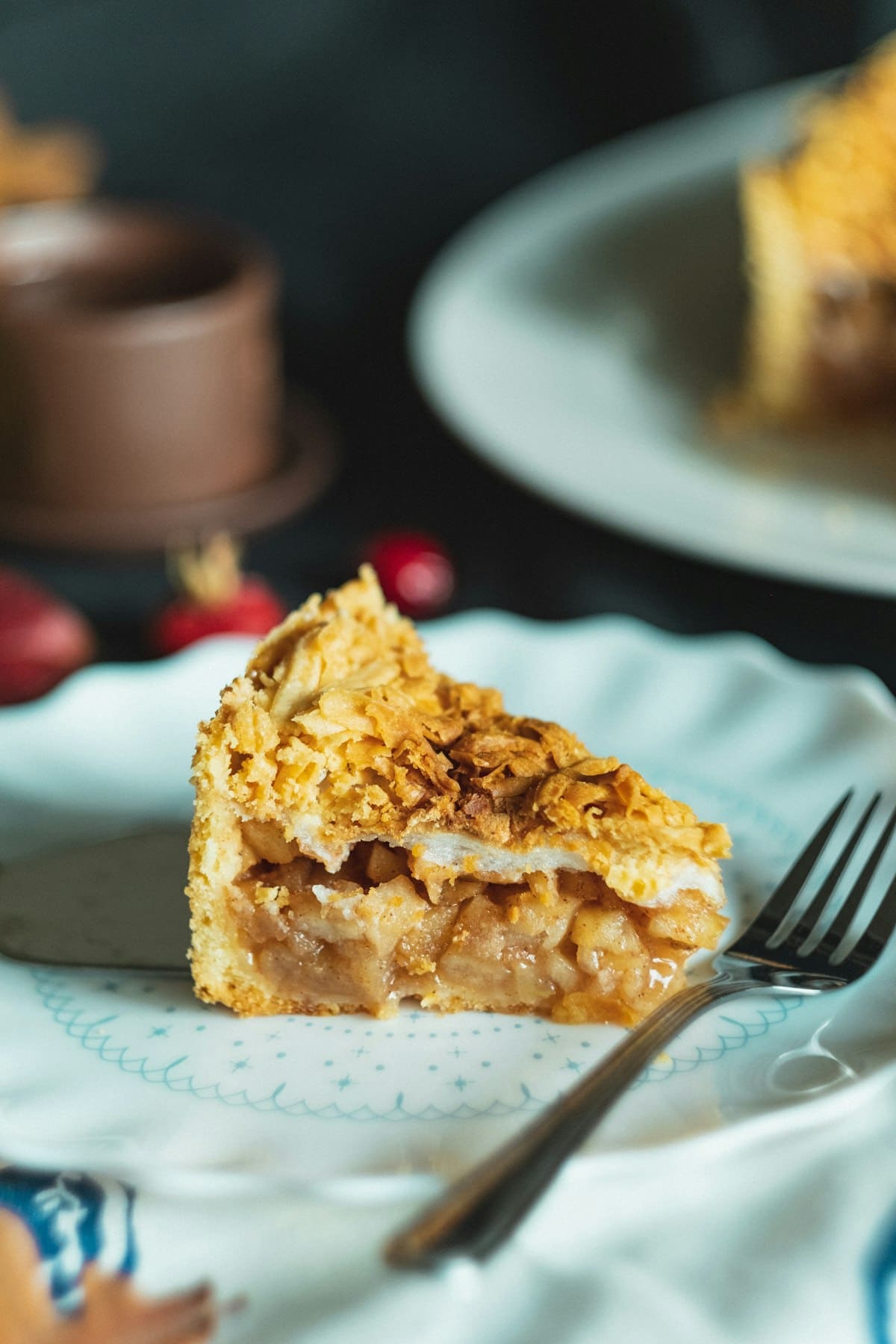
Few desserts in the American culinary canon evoke the warm nostalgia of a Southern summer quite like classic southern fresh peach cobbler. At its peak, fresh peach cobbler is extraordinary comfort food: sweet, ripe freestone peaches baked in a rich, bubbling amber syrup spiced with cinnamon, nutmeg, and bourbon, blanketed under a golden, tender, butter-crisped buttermilk drop biscuit crust that soaks up peach juices underneath while baking crisp on top. Yet home bakers frequently encounter a disappointing mess: a watery, soupy fruit filling that never thickens, paired with a gummy, doughy biscuit underside that stays raw. Crafting church-supper perfection requires understanding fruit cell osmosis, starch gelatinization, and biscuit steam physics.
In this master baker’s tutorial, you will discover the two-stage sugar maceration method, why cornstarch must reach a full boil to activate, and how cold butter drop biscuits create the ultimate tender cobbler crown.
The Culinary Chemistry of Fruit Cobblers: Osmosis & Thickening
Fresh peaches are over 85% water held tightly inside microscopic plant cells. Managing this water is the difference between pie filling and fruit soup:
- Osmotic Maceration & Juicing: Tossing sliced raw peaches directly with dry sugar and immediately baking traps home cooks. As the fruit warms in the oven, sugar draws out enormous volumes of water through *osmosis*. This sudden flood of free fruit water overpowers thickeners, leaving the filling runny. Macerating sliced peaches with sugar at room temperature for 30 minutes draws out the juice *before* baking. Pouring off the strained juice and simmering it on the stove with cornstarch pre-thickens the syrup into a rich glaze before it ever touches the baking dish.
- Amylose Gelatinization Threshold: Cornstarch granules must be heated to at least 203°F (95°C) to fully hydrate, swell, and burst, releasing amylose polymers that thicken fruit syrup. Baking raw cornstarch in an oven can result in cloudy, ungelatinized starch if the fruit center doesn’t reach a rolling boil. Simmering the peach juice on the stovetop ensures 100% starch activation.
- The Buttermilk Drop Biscuit Texture: Rolled pie dough can turn soggy under wet fruit. A Southern buttermilk drop biscuit dough (high butterfat, leavened with baking powder and baking soda) dropped in rustic spoonfuls creates open steam vents between biscuit mounds. Hot steam escapes freely, allowing the biscuit tops to bake golden-crisp while the bottom absorbs peach syrup into a decadent dumpling-like crumb.
- Acid Balance (Lemon Juice): Ripe summer peaches have high natural fructose and sucrose but low acidity. A generous tablespoon of fresh lemon juice prevents the cobbler from tasting cloyingly sweet while activating natural fruit pectins.
Ingredient Blueprint: The Georgia Orchard Standard
Use fresh summer peaches at peak fragrance:
- Fresh Ripe Peaches (3 lbs / 1.4 kg, approx. 6 to 8 medium peaches): Peeled and sliced into 1/2-inch thick wedges. Freestone peaches release easily from the pit.
- Granulated Sugar (1/2 cup / 100g) & Dark Brown Sugar (1/4 cup / 50g): For caramel undertones.
- Cornstarch (2.5 tbsp / 20g): The ideal clear, glossy thickener for stone fruit.
- Fresh Lemon Juice (1.5 tbsp), Ground Cinnamon (1 tsp), Nutmeg (1/4 tsp), & Vanilla Extract (1 tsp).
- The Buttermilk Drop Biscuit Crust:
- 2 cups (250g) all-purpose flour
- 1/4 cup (50g) granulated sugar + 1 tbsp for sprinkling
- 2 tsp baking powder & 1/2 tsp baking soda
- 1/2 tsp fine sea salt
- 8 tbsp (1 stick / 115g) cold unsalted butter, cubed small
- 3/4 cup (180 ml) cold whole buttermilk
Step-by-Step Baking Protocol
Follow these steps for a bubbling, golden Southern cobbler:
- Peel & Slice Peaches: Score an “X” in the bottom of each peach and submerge in boiling water for 45 seconds, then plunge into ice water. The skins will slip off effortlessly. Slice peaches into 1/2-inch thick wedges.
- Macerate & Extract Juices (30 Minutes): In a large bowl, toss the sliced peaches with 1/2 cup white sugar, 1/4 cup brown sugar, 1.5 tbsp lemon juice, cinnamon, and nutmeg. Let rest at room temperature for 30 minutes. The peaches will soften and release about 1 cup of fragrant amber juice.
- Simmer & Thicken the Syrup: Strain the released peach juice through a colander into a small saucepan (keep peaches in the bowl). Whisk 2.5 tbsp cornstarch and 1 tsp vanilla into the cold juice until dissolved. Place over medium heat and bring to a boil, whisking continuously for 2 minutes as it thickens into a glossy, amber gel. Pour the hot thickened syrup back over the sliced peaches and toss to coat. Pour fruit into a buttered 9×13-inch baking dish.
- Make the Cold Buttermilk Biscuit Dough: In a mixing bowl, whisk flour, 1/4 cup sugar, baking powder, baking soda, and salt. Add cold cubed butter. Using a pastry cutter or your fingers, cut butter into the flour until it resembles coarse peas. Pour in cold buttermilk; stir with a fork for 20 seconds just until a soft, shaggy dough forms. Do not overmix.
- Drop Biscuits Over Hot Peaches: Using a large spoon or cookie scoop, drop 8 to 10 generous mounds of biscuit dough across the top of the peach filling, leaving small gaps between biscuits for steam to escape. Brush biscuit tops lightly with melted butter or heavy cream and sprinkle with coarse sugar and a pinch of cinnamon.
- Bake to Deep Golden Bubble: Bake in a preheated 375°F (190°C) oven for 40 to 45 minutes until the peach filling is bubbling vigorously and the biscuit tops are deep golden-brown and cooked through (a toothpick inserted in the center of a biscuit emerges clean). Cool on a wire rack for at least 30 minutes before serving. Serve warm with generous scoops of vanilla bean ice cream.
Peach Cobbler Troubleshooting Diagnostic
| Symptom | Root Cause | Quick In-Pan Fix | Future Prevention |
|---|---|---|---|
| Filling is soupy and watery | Peaches were not macerated; cornstarch did not boil | Let cobbler cool completely; starch continues to set as it cools | Always macerate peaches and boil the juice with cornstarch first |
| Biscuit dough gummy and raw on bottom | Cobbler removed too early; fruit was cold when topped | Cover loosely with foil; bake for an additional 10 minutes | Ensure fruit is hot when biscuits are added; bake full 45 mins |
| Biscuits tough, hard, and flat | Overworked dough or butter melted before baking | Spoon warm peach syrup over biscuits to soften | Keep butter ice-cold; mix dough gently just until combined |
| Peaches taste bland and overly sweet | Under-ripe peaches used; omitted fresh lemon juice | Drizzle 1 tbsp fresh lemon juice over filling before serving | Always add fresh lemon juice to balance peach fructose sugars |
Classic Southern Fresh Peach Cobbler Recipe Card
Prep time: 30 minutes | Macerate time: 30 minutes | Bake time: 45 minutes | Yield: 8 servings
Ingredients:
- 3 lbs (1.4 kg) fresh ripe freestone peaches, peeled and sliced 1/2-inch thick
- 1/2 cup (100g) granulated sugar
- 1/4 cup (50g) packed dark brown sugar
- 2.5 tbsp (20g) cornstarch
- 1.5 tbsp fresh lemon juice
- 1 tsp ground cinnamon & 1/4 tsp freshly grated nutmeg
- 1 tsp pure vanilla extract
- For the Buttermilk Drop Biscuit Crust:
- 2 cups (250g) all-purpose flour
- 1/4 cup (50g) granulated sugar
- 2 tsp baking powder
- 1/2 tsp baking soda
- 1/2 tsp fine sea salt
- 8 tbsp (1 stick / 115g) cold unsalted butter, cubed small
- 3/4 cup (180 ml) cold whole buttermilk
- 1 tbsp turbinado coarse sugar for topping
- Vanilla bean ice cream for serving
Nutritional Breakdown (Per Serving): Calories: 410 kcal | Protein: 5g | Fat: 13g | Saturated Fat: 8g | Carbohydrates: 70g | Dietary Fiber: 4g | Sugars: 42g | Sodium: 320mg
Frequently Asked Questions
Can I use frozen or canned peaches?
Yes! If using frozen peaches, thaw them completely and drain the excess liquid before macerating. If using canned peaches, select peaches packed in 100% juice (not heavy syrup), drain off half the canning syrup, and reduce the added sugar by half.
Why is a drop biscuit crust better than rolled dough?
Drop biscuits have a higher moisture-to-fat ratio and open irregular surfaces. This allows oven heat to penetrate deep into the dough while letting hot peach steam vent freely, preventing the soggy dough underside that plagues rolled pie crust cobblers.
Pair this dessert with our Southern soul food favorites: Crispy Southern Buttermilk Fried Chicken and Authentic Southern Shrimp and Grits.
The 15-Minute Weeknight Dinner Matrix
Stop wondering what to cook tonight. Get 20 modular, test-kitchen meals ready in 15 minutes or less from 5 pantry staples—with dual metric/US measurements & flavor grids.
Every recipe on QuickRecipeAI is independently developed, stopwatch-timed, and flavor-tested at least 3 times in home kitchens by Safi A. Calibrated with dual metric/US measurements and validated against USDA FoodData Central. Review Our Test Kitchen Standards & Testing Methodology →

Written & Culinary Tested by Safi A
Verified Recipe AuthorSafi A is a recipe developer and the founder of QuickRecipeAI. Driven by everyday food science and fast, high-protein weeknight cooking, every recipe on this website is rigorously tested at least three times in residential home test kitchens to ensure dependable measurements, consistent cook times, and foolproof flavor.
More recipes to explore

Why Homemade Dal Makhani Tastes Chalky and Thin: The Slow 4-Hour Starch Gelatinization and Cultured Butter Emulsion Secret
⚡ Quick Recipe Jump to Recipe Print Recipe Revered across the Indian subcontinent and featured…

Why Pierogi Dough Tears and Filling Turns Bland: The Sour Cream Knead Elasticity and Farmer’s Cheese Sharpness Secret
⚡ Quick Recipe Jump to Recipe Print Recipe Across the homes, milk bars (*bary mleczne*),…

Why Mille-Feuille Layers Puff Unevenly and Collapse: The Weighted Blind-Bake Caramelization and Stabilized Diplomat Cream Secret
⚡ Quick Recipe Jump to Recipe Print Recipe In the grand windows of legendary Parisian…
Leave a Reply