
20-Minute Thai Basil Chicken Stir-Fry (Better Than Takeout)
⚡ Quick Recipe Jump to Recipe Print Recipe Save to Pinterest If you ask anyone in Bangkok what Thailand’s true national street food […]
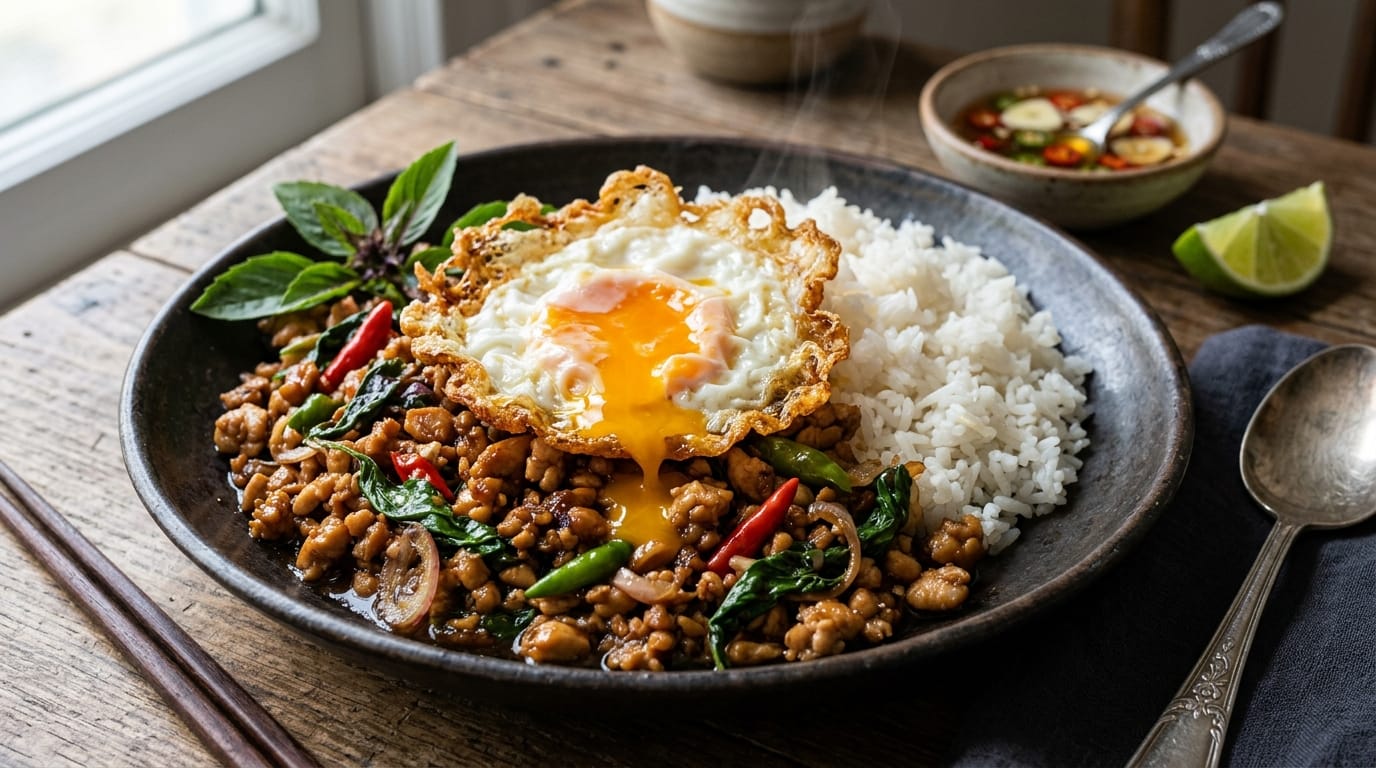
If you ask anyone in Bangkok what Thailand’s true national street food dish is, they won’t say Pad Thai—they will immediately point you to a sizzling street stall churning out Pad Krapow Gai (Thai Holy Basil Chicken). In our QuickRecipeAI test kitchen, we set out to crack the code on this 20-minute street cart icon so you can replicate that unmistakable smoky wok hei char, tongue-tingling chili-garlic punch, and glossy savory glaze right on a standard home stovetop—surpassing takeout in less time than delivery takes to arrive.
Most Western recipes make two critical mistakes: they dice lean chicken breast into dry, stringy chunks, and they simmer delicate basil leaves in boiling sauce until they turn into black, bitter sludge. By hand-mincing juicy chicken thighs, bruising the aromatics in a mortar and pestle to liberate volatile essential oils, and executing the 30-Second Off-Heat Basil Wilt, you get restaurant-grade Thai basil chicken that explodes with vibrant flavor in every single bite.
⏱️ Recipe Quick-Info
The Food Science: How High-Heat Wok Maillard Reactions Create Takeout Magic
The intoxicating aroma of Thai basil chicken relies on rapid thermal convection and chemical phase changes that occur between 350°F and 400°F (175°C to 204°C):
When chicken breast is stir-fried, it lacks intramuscular fat (holding only ~2% lipids), causing water to weep out quickly into the pan. This pools into a murky gray liquid that boils the meat rather than searing it. Boneless chicken thighs contain 8% to 10% natural fat. As the coarsely minced thigh meat hits the smoking hot wok surface, rendered fat fries the micro-edges of the meat, triggering the Maillard reaction that builds complex roasted umami fond on the pan floor.
Simultaneously, Thai basil leaves (whether holy basil Ocimum tenuiflorum or sweet Thai basil Ocimum basilicum) are packed with highly volatile aromatic terpenes—specifically eugenol (which delivers clove-like spicy warmth) and estragole (which gives sweet anise undertones). These aromatic compounds have exceptionally low boiling points. If you simmer basil leaves over a live flame for two minutes, these precious volatile oils evaporate into thin air, leaving you with limp, bitter cellulose. By killing the heat source completely and tossing the leaves in residual pan steam for just 30 seconds, the cellular structure collapses gently while 100% of the intoxicating aromatic perfume remains trapped directly in the chicken glaze.
The 15-Minute Weeknight Dinner Matrix
Stop wondering what to cook tonight. Get 20 modular, test-kitchen meals ready in 15 minutes or less from 5 pantry staples—with dual metric/US measurements & flavor grids.
Key Ingredients & Smart Street-Food Substitutions
Authentic Thai stir-frying is about ingredient harmony: balancing intense allium pungency, fiery capsaicin, salty fish sauce, and sweet caramelized soy. Here is your shopping breakdown:
The Protein & Fresh Aromatics:
- 1.25 lbs (570g) boneless, skinless chicken thighs: Coarsely chopped by hand with a heavy chef’s knife or 85/15 ground chicken. Hand-mincing creates irregular craggy edges that trap maximum sauce. Sub: ground pork (traditional Pad Krapow Moo), lean ground turkey, or extra-firm pressed cubed tofu for vegetarian.
- 2 packed cups (60g) fresh Thai basil leaves: Authentic Holy Basil (Bai Krapow) has jagged leaves and a spicy clove bite; Thai Sweet Basil (Bai Horapa) has purple stems and a sweet anise profile. Either works wonderfully. Emergency Western Sub: 2 cups fresh Italian Genovese basil plus 4 to 5 fresh mint leaves.
- 6 to 8 fresh Thai bird’s eye chilies (prik kee noo): Red and green. They pack intense, clean heat (50,000 to 100,000 Scoville units). Milder Sub: 2 fresh serrano or jalapeño peppers with seeds removed.
- 6 large fresh garlic cloves: Roughly smashed. Fresh garlic is vital; never use jarred garlic in oil.
- 1 small shallot: Thinly sliced. Adds delicate sweet allium background notes.
- 4 large fresh eggs: For the iconic blistered-edge Thai fried egg (Kai Dao) topper.
The 4-Part Glossy Glaze:
- 2 tbsp oyster sauce: Delivers savory depth, viscosity, and glossy shine.
- 1 tbsp regular light soy sauce: Provides salty umami baseline.
- 1 tbsp Thai dark sweet soy sauce (or kecap manis): Essential for that deep dark mahogany street-cart color and caramelized molasses sweetness. Sub: 1 tbsp regular dark soy sauce + 1 tsp dark brown sugar.
- 1 1/2 tsp fish sauce (nam pla): The soul of Thai cuisine, providing salty fermented salinity that elevates all surrounding flavors.
- 1 tsp brown sugar & 2 tbsp chicken broth: Balances chili sharpness and loosens the glaze.
Step-by-Step Instructions: How to Cook Pad Krapow Gai in 20 Minutes
- Bruise the Garlic-Chili Paste: Place the 6 garlic cloves and 6 to 8 bird’s eye chilies into a heavy stone mortar and pestle. Pound firmly for 45 to 60 seconds. You want jagged, coarsely crushed pieces where the chili seeds and skins burst open into the garlic juices—not a smooth paste. (If you don’t own a mortar, pulse 4 times in a mini food processor).
- Pre-Mix the Sauce: In a small glass bowl, combine the oyster sauce, regular soy sauce, dark sweet soy sauce, fish sauce, brown sugar, and chicken broth. Whisk until the sugar granules dissolve completely. Having this sauce pre-mixed before heating the pan is mandatory; Thai stir-frying moves too fast to measure bottles on the fly.
- Fry the Crispy Thai Eggs (Kai Dao): Set a 12-inch carbon steel wok or heavy skillet over high heat. Add 2 tablespoons of high-smoke-point oil. When the oil is shimmering and slightly smoking (375°F / 190°C), crack an egg directly into the center. Spoon hot oil continuously over the egg whites for 60 to 90 seconds. The edges will dramatically puff into a crisp, golden-brown lace while the yolk stays gloriously runny. Transfer to a warm plate and repeat for remaining eggs, keeping the aromatic cooking oil in the pan.
- Bloom the Pounded Aromatics: Drop the stove flame slightly to medium-high. Dump the crushed chili-garlic mixture and sliced shallots into the hot residual oil. Sauté vigorously with a wooden spatula for 30 to 45 seconds. The kitchen will immediately fill with the intoxicating, eye-widening aroma of sizzling Thai street food.
- Dry-Sear the Chicken: Turn the flame up to high. Add the coarsely minced chicken thighs to the smoking aromatics. Spread the meat flat against the pan floor and leave it undisturbed for 90 seconds to build deep golden browning. Then, using your spatula, break the meat into craggy bite-sized morsels, tossing continuously for 2 to 3 minutes until no longer pink and all surface moisture has evaporated.
- Deglaze with the Glossy Sauce: Pour the pre-mixed stir-fry sauce around the outer perimeter of the hot wok. As it cascades down the scorching sides, it will instantly reduce and bubble into a glossy lacquer. Toss the chicken continuously for 60 to 90 seconds until every morsel is coated in a deep mahogany glaze.
- The 30-Second Basil Wilt: Kill the stove heat completely! Immediately dump the 2 packed cups of fresh Thai basil leaves over the sizzling chicken. Fold the leaves into the meat with tongs for exactly 30 seconds. The ambient pan steam will soften the leaves into glossy, fragrant ribbons without cooking away their essential oils.
- Plate and Serve: Spoon generous mounds of fluffy steamed jasmine rice onto warm plates. Pile the sizzling Thai basil chicken high alongside the rice, crown each serving with a crispy fried egg, and serve with lime wedges and a side of chili fish sauce (Prik Nam Pla).
🧑🍳 Test Kitchen Secrets from Safi A
- Why the Mortar & Pestle Beats a Knife: In our comparative test kitchen trials, mincing garlic and chilies cleanly with a chef’s knife yielded 50% less aromatic impact than crushing them in a granite mortar. Slicing shears plant cell walls cleanly, leaving volatile oils trapped inside. Pounding ruptures cell membranes, releasing aromatic sulfur compounds and capsaicin directly into the cooking oil to flavor the entire skillet foundation.
- Hand-Minced Thigh vs Commercial Ground Chicken: Pre-packaged ground chicken from the supermarket is typically ground through a 3mm plate into a paste-like homogeny that turns dense and spongy when cooked. Taking 3 minutes to rough-chop boneless skinless chicken thighs on a cutting board yields irregular 1/4-inch juicy nuggets that develop crispy seared edges while retaining luscious tenderness inside.
- The Crispy Egg (Kai Dao) Is Mandatory: Never skip the fried egg! In Thai street food culture, the runny, rich yolk of Kai Dao is considered an essential flavor component of the dish. Breaking the warm, liquid yolk over the fiery, savory chicken softens the chili burn, coats the jasmine rice in golden richness, and balances the pungent fish sauce.
Troubleshooting Common Thai Stir-Fry Pitfalls
| Issue | Root Cause | Chef Solution |
|---|---|---|
| Chicken boiled in liquid instead of searing | Wok was not hot enough, chicken breast was used, or crowded pan trapped steam. | Use chicken thighs; preheat pan until smoking; let chicken sear undisturbed for 90 secs before stirring. |
| Basil turned black, limp, and tasteless | Basil was simmered over active heat for multiple minutes, boiling away volatile terpenes. | Always kill the heat completely before adding basil; fold gently in residual pan steam for 30 secs. |
| Dish tastes overwhelmingly salty | Too much fish sauce added, or dark soy sauce omitted (missing sweet balance). | Balance with dark sweet soy sauce and 1 tsp brown sugar; serve over unsalted steamed jasmine rice. |
| Fried egg edges are soggy, not crispy | Oil was not hot enough, or too little cooking fat used. | Use 2 full tablespoons of oil heated to 375°F (wisps of smoke); spoon boiling oil directly over egg whites. |
What to Serve with Pad Krapow Gai
Because Thai basil chicken delivers robust savory intensity and chili warmth, pairing it with complementary street-food sides completes the culinary feast:
- Steamed Jasmine Rice: Fragrant, fluffy Thai jasmine rice (Khao Hom Mali) acts as the essential sponge that soaks up every drop of garlic-chili chicken juices.
- Prik Nam Pla (Chili Fish Sauce Condiment): Stir together 2 tablespoons fish sauce, 1 tablespoon fresh lime juice, 1 finely sliced bird’s eye chili, and 1 minced garlic clove in a small dish. Spoon over the rice for an authentic street-vendor punch.
- Crisp Cucumber Rounds: Cool, refreshing slices of Persian or English cucumbers provide a crisp, refreshing palate cleanser against the fiery chili heat.
- Chilled Thai Iced Tea: Rich black tea spiced with star anise and topped with sweetened condensed milk provides a heavenly, creamy contrast to spicy street stir-fry.
Nutritional Facts (Per Serving)
📊 Nutritional Facts per Serving
Nutritional calculation based on 4 portions prepared with chicken thighs, fresh aromatics, stir-fry glaze, and 1 crispy fried egg (excluding optional jasmine rice).
Frequently Asked Questions About Thai Basil Chicken
What is the difference between Holy Basil and Thai Sweet Basil?
Holy Basil (Bai Krapow) is the authentic herb used in Thailand for this dish; it has serrated green-purple leaves with a peppery, clove-like, and slightly camphoraceous aroma that intensifies under heat. Thai Sweet Basil (Bai Horapa) has smooth dark green leaves, deep purple stems, and a prominent sweet anise/licorice aroma (frequently used in Thai red and green curries). While Holy Basil is authentic, Thai Sweet Basil produces a sensational, restaurant-quality stir-fry and is much easier to find in Western supermarkets!
Can I make this dish less spicy?
Yes! Thai street vendors typically use 8 to 12 bird’s eye chilies for fiery heat. For a mild family-friendly version, reduce bird’s eye chilies to 1 or 2 with seeds removed, or substitute with 1 diced red bell pepper and 1 mild jalapeño. You’ll retain gorgeous red color and peppery sweetness without searing heat.
Can I meal-prep or freeze Thai basil chicken?
Yes, the cooked chicken stir-fry meal preps exceptionally well in an airtight glass container in the refrigerator for up to 4 days. When reheating, warm in a hot skillet with 1 tablespoon of water for 2 minutes to restore its glossy sheen. Always fry a fresh egg right before eating, as fried eggs do not reheat well.
Can I substitute chicken breast instead of thighs?
You can use boneless skinless chicken breasts if you prefer very lean meat, but take care not to overcook. Mince the breast meat finely and cook over screaming high heat for no more than 2 to 3 minutes total. Adding 1 teaspoon of cornstarch to the raw minced breast meat before cooking locks in moisture and prevents dry, stringy texture.
Have different meats or vegetables in your fridge?
No worries! Try our Free AI Recipe Generator at https://quickrecipeai.com/ai-recipe-generator/ — input whatever proteins, greens, or pantry sauces you have and get a custom 20-minute dinner idea in seconds.
Try the Free Recipe Generator →
Every recipe on QuickRecipeAI is independently developed, stopwatch-timed, and flavor-tested at least 3 times in home kitchens by Safi A. Calibrated with dual metric/US measurements and validated against USDA FoodData Central. Review Our Test Kitchen Standards & Testing Methodology →
Related Quick Asian Stir-Fry & Chicken Recipes You’ll Love
If you loved this sizzling 20-minute street-cart stir-fry, explore more bold, flavor-packed favorites from our collection:
- 15-Minute Authentic Thai Basil Beef (Pad Krapow Neua): The Scorched Center-Well Technique — Master authentic spicy beef stir-fry with scorched aromatics and wok hei.
- Why Thai Green Curry Tastes Dull and Watery: The Coconut Cream Crack Secret — The culinary secret to aromatic, unctuous Thai green curry.
- 15-Minute Cold-Pan Crispy Chicken Thighs: The Zero-Splatter Fat-Rendering Secret — Ultra-crispy chicken skin with juicy tender meat.
- 15-Minute Garlic Butter Shrimp Pasta (One Pot Method) — Plump seared shrimp and al dente pasta in a glossy lemon garlic emulsion glaze.

Written & Culinary Tested by Safi A
Verified Recipe AuthorSafi A is a recipe developer and the founder of QuickRecipeAI. Driven by everyday food science and fast, high-protein weeknight cooking, every recipe on this website is rigorously tested at least three times in residential home test kitchens to ensure dependable measurements, consistent cook times, and foolproof flavor.
More recipes to explore

The Lazy Sunday 3-Ingredient Pancakes (Fluffy Every Time)
⚡ Quick Recipe Jump to Recipe Print Recipe Save to Pinterest On slow Sunday mornings,…

Air Fryer Crispy Falafel Bites (No Oil, 14 Min)
⚡ Quick Recipe Jump to Recipe Print Recipe Save to Pinterest If you have ever…

15-Minute Garlic Butter Shrimp Pasta (One Pot Method)
⚡ Quick Recipe Jump to Recipe Print Recipe Save to Pinterest When dinner needs to…
Leave a Reply