
15-Minute Garlic Butter Shrimp Pasta (One Pot Method)
⚡ Quick Recipe Jump to Recipe Print Recipe Save to Pinterest When dinner needs to be on the table in fifteen flat minutes, […]
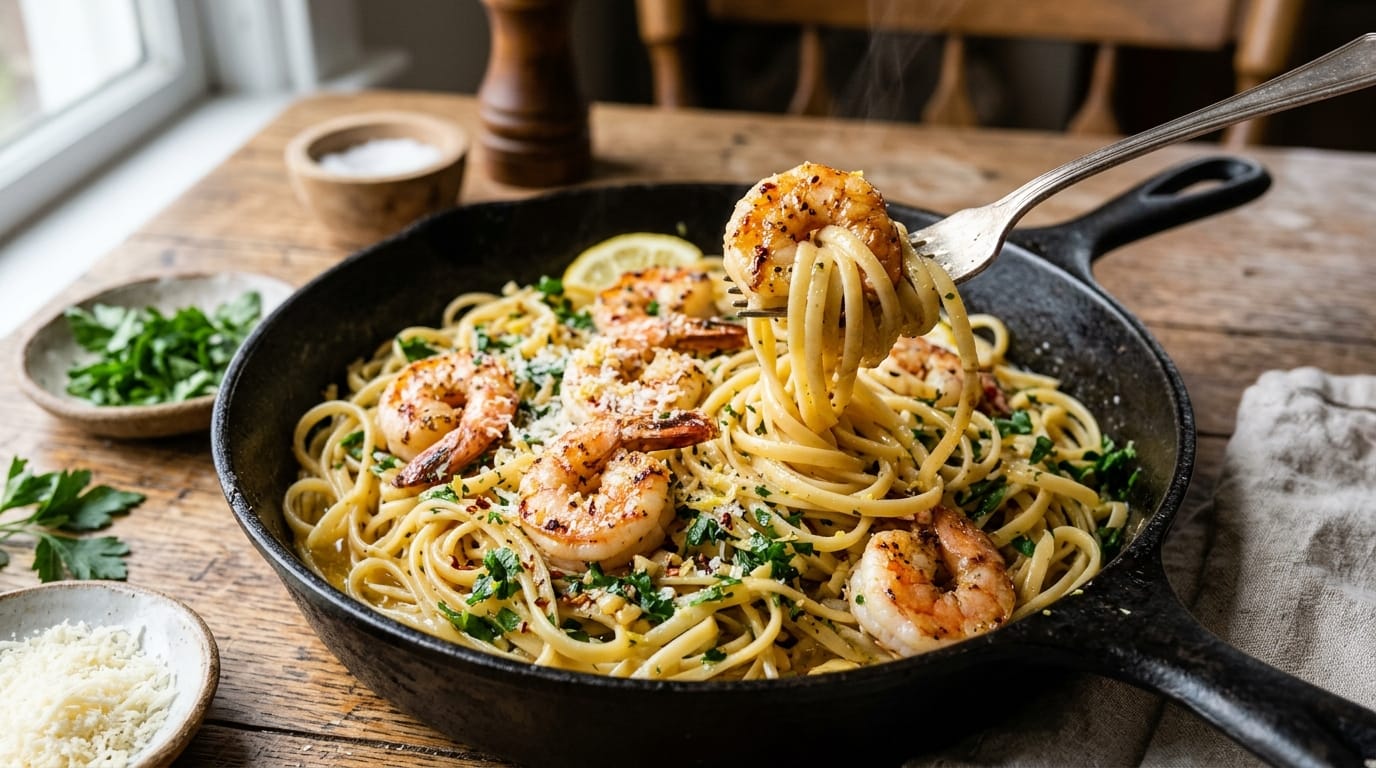
When dinner needs to be on the table in fifteen flat minutes, this 15-minute garlic butter shrimp pasta is our ultimate test-kitchen triumph. In early development, we tried what dozens of internet recipes recommend: boiling raw shrimp together with dry pasta in one pot from start to finish. The result was a culinary disaster—chalky, rubbery shrimp that tasted like pencil erasers while the pasta was still crunching in the center. That led us to pioneer the Two-Stage Sizzle-and-Pull Method: a 90-second hot sear for juicy, plump shrimp, followed by simmering the pasta directly in the garlicky seafood fond. Every drop of natural pasta starch stays locked in the pan, creating a glossy, restaurant-style lemon butter glaze that clings to every strand.
⏱️ Recipe Quick-Info
The Food Science: Why the One-Pot Starch Emulsion Beats Traditional Draining
Traditional pasta cookery instructs you to boil four to six quarts of water, dump in a pound of dried noodles, and discard all the cloudy pasta water down the sink drain before attempting to sauce the noodles. In doing so, you pour the single most potent culinary emulsifier in Italian cooking straight down the plumbing: gelatinized amylose and amylopectin starches.
When pasta cooks in a strictly measured volume of chicken broth and water in a wide skillet, those released starch granules remain in the pan. As the liquid reduces, the starch concentration skyrockets. When you finish the dish off-heat with chilled cubed butter—a classic French culinary technique known as monté au beurre—the milk fats within the butter fracture into tiny microscopic droplets. Instead of separating into a greasy slick of oil, the gelatinized starch molecules entrap these lipid droplets, forming a stable, velvety emulsion without requiring a single drop of heavy whipping cream or flour roux.
Furthermore, because the pasta simmers directly in savory chicken stock and fragrant garlic-infused seafood fond rather than plain tap water, the interior core of every noodle absorbs savory umami flavors from the inside out.
The 15-Minute Weeknight Dinner Matrix
Stop wondering what to cook tonight. Get 20 modular, test-kitchen meals ready in 15 minutes or less from 5 pantry staples—with dual metric/US measurements & flavor grids.
Core Ingredients and Smart Dietary Swaps
This streamlined one-pot dinner relies on pantry and fresh staples that deliver big, vibrant flavors in minimal time. Here is what you will need:
Key Recipe Ingredients:
- 1 lb (450g) raw jumbo shrimp (16/20 or 21/25 count): Peeled and deveined, preferably with tails left intact for presentation and extra depth. Large shrimp are crucial because they allow you to build golden surface caramelization without overcooking the delicate interior flesh. Sub: large sea scallops, bite-sized chicken breast cutlets, or pressed extra-firm cubed tofu.
- 8 oz (225g) linguine or thin spaghetti: Broken in half crosswise so they easily submerge into your skillet. Linguine provides the optimal surface area for the butter emulsion to cling to. Sub: gluten-free corn/rice linguine (reduce liquid by 1/4 cup and check doneness early) or fettuccine.
- 5 fresh garlic cloves: Finely minced or sliced razor-thin. Fresh garlic is non-negotiable; jarred pre-minced garlic lacks the sweet, sharp pungency needed for scampi-style sauces and often tastes metallic when sautéed.
- 4 tablespoons (60g) unsalted butter: Divided into 1 tablespoon for searing the shrimp and 3 tablespoons chilled and diced into small cubes for mounting the sauce. Using unsalted butter allows you to control the exact sodium level of the reduction. Sub: European cultured vegan butter block (e.g., Miyoko’s) for dairy-free.
- 2 tablespoons extra-virgin olive oil: Raises the smoke point of the butter during the sear and lends fruity, grassy undertones to the sauce.
- 2 1/2 cups (600ml) low-sodium chicken broth: Infuses the pasta noodles with deep savory complexity as they hydrate. Sub: 2 cups broth plus 1/2 cup crisp, dry white wine (Pinot Grigio or Sauvignon Blanc) for classic trattoria acidity.
- 1 cup (240ml) cold water: Calibrates the precise hydration ratio so noodles reach al dente right as the pan liquid reaches saucy perfection.
- 2 tablespoons fresh lemon juice: Squeezed fresh from 1 ripe lemon. The citric acid cuts through the richness of the butter and heightens the sweet salinity of the shrimp.
- 1/2 cup (50g) freshly grated Parmigiano-Reggiano: Shredded directly from a block. Microplaned aged parmesan dissolves instantly into the warm emulsion, boosting richness and natural glutamates.
- 3 tablespoons chopped fresh Italian flat-leaf parsley: Brightens the pan with herbal freshness and vibrant color contrast.
- Pantry seasonings: 1/2 teaspoon kosher salt, 1/4 teaspoon freshly cracked black pepper, and 1/4 teaspoon crushed red pepper flakes for gentle warmth.
Step-by-Step Instructions: How to Cook One-Pot Garlic Butter Shrimp Pasta
- Dry and Season the Shrimp: Lay the thawed, peeled shrimp on a clean layer of paper towels and press firmly to remove all surface moisture. Moisture is the enemy of browning; dry shrimp sear golden, whereas wet shrimp steam gray. Sprinkle both sides with 1/4 teaspoon kosher salt and 1/8 teaspoon black pepper.
- Sear the Shrimp (The Sizzle-and-Pull Window): Set a wide, deep 12-inch skillet (stainless steel or enameled cast iron) over medium-high heat. Add 1 tablespoon of olive oil and 1 tablespoon of butter. When the butter foams and stops sputtering, lay the shrimp in a single layer. Sear undisturbed for 90 seconds until the bottom turns pink and golden. Flip with tongs and cook for only 60 seconds on the second side. Immediately remove the shrimp to a warm plate and tent loosely with foil. Do not clean the pan!
- Bloom the Garlic and Chili: Drop stove heat to medium. Add the remaining 1 tablespoon of olive oil to the flavorful pan drippings. Toss in the minced garlic and crushed red pepper flakes, swirling continuously with a wooden spoon for 30 to 45 seconds. As soon as the garlic releases its sweet, mouthwatering fragrance and turns lightly blonde, proceed immediately to prevent scorching.
- Add Liquid and Submerge Pasta: Pour in the 2 1/2 cups of low-sodium chicken broth and 1 cup of water, using your wooden spoon to scrape up the caramelized seafood fond from the pan floor. Snap the 8 ounces of linguine in half crosswise and scatter them into the skillet, pressing down with tongs so every strand is submerged beneath the liquid.
- Simmer to Al Dente: Bring the liquid to a lively rolling boil over medium-high heat. Cook uncovered for 7 to 8 minutes, using tongs to stir and separate the pasta every 90 seconds to prevent clumps. As the noodles absorb the broth, the bubbling liquid will reduce into a thick, glossy puddle (about 1/4 cup remaining).
- Mount the Emulsion (Monté au Beurre): Pull the skillet completely off the hot burner. Immediately scatter the 3 tablespoons of chilled, diced butter across the hot pasta and drizzle in the fresh lemon juice. Vigorously toss and swirl the pasta with tongs for 60 seconds. The friction and thermal shock will transform the residual starchy broth and melting butter into a glossy, velvety glaze that clings to every noodle.
- Fold in Shrimp and Garnish: Return the seared shrimp and all the accumulated juices from their resting plate back into the warm pasta. Sprinkle in the grated Parmigiano-Reggiano and chopped parsley. Toss for 30 seconds until the cheese melts seamlessly into the sauce and the shrimp are warmed through. Serve immediately straight from the skillet with extra lemon wedges.
🧑🍳 Test Kitchen Secrets from Safi A
- The 90-Second Sizzle-and-Pull Rule: Shrimp are 75% water and very lean protein. Their muscle fibers contract rapidly when exposed to heat above 140°F (60°C). By pulling the shrimp from the skillet while they are still slightly translucent in the absolute center (a wide “C” shape rather than a tight, tightly curled “O” shape), carryover residual heat finishes them to tender, juicy perfection while you cook the pasta.
- Why Butter Must Be Refrigerator-Cold: When mounting the pan sauce at the end of cooking, never use room-temperature or melted butter. Chilled butter melts slowly as you toss the noodles; this gradual melt allows the water molecules inside the butter to bind seamlessly with the starch matrix. Warm butter simply liquefies into clarified oil, separating the sauce into an unappealing puddle.
- Liquid Precision Matters: In conventional pasta cooking, water volume does not matter because you drain it away. In one-pot pasta cookery, liquid volume is an exact ingredient. 3 1/2 total cups of liquid (2 1/2 cups broth + 1 cup water or wine) is the scientifically tested sweet spot for 8 ounces of dry long pasta. If your stove runs hot and the liquid evaporates before the pasta is tender, splash in 2 to 3 tablespoons of hot water; do not drown the pan.
Troubleshooting Common One-Pot Pasta Mistakes
| Issue | Root Cause | Chef Solution |
|---|---|---|
| Noodles stuck together in a clump | Pasta was dropped in whole without stirring during the first 2 minutes. | Snap pasta in half, fan it across the skillet, and stir aggressively with tongs every 90 seconds. |
| Shrimp became tough and rubbery | Shrimp were boiled alongside the dry pasta for the full 8 minutes. | Always follow the Sizzle-and-Pull rule: sear shrimp 90 secs, remove, and return only at the very end. |
| Sauce turned oily rather than glossy | Butter was added over boiling heat, or warm butter was used. | Remove skillet from the flame and mount with refrigerator-chilled cubed butter, tossing vigorously. |
| Garlic tastes bitter or burnt | Garlic was thrown into a screaming hot pan after the sear. | Reduce skillet flame to medium and bloom garlic for no more than 30 to 45 seconds before adding broth. |
What to Serve with Garlic Butter Shrimp Pasta
Because this 15-minute meal delivers rich butter, savory garlic, and bright lemon citrus, it pairs naturally with crisp, fresh sides and rustic bread:
- Warm Garlic Bread or Artisan Ciabatta: Crusty bread is mandatory for wiping the skillet clean of every last drop of garlic butter glaze.
- Classic Caesar or Crisp Green Salad: Bitter greens like arugula, romaine, or radicchio tossed in a sharp lemon-dijon vinaigrette provide refreshing palate-cleansing acidity.
- Charred Asparagus or Broccolini: Quickly blister tender vegetable spears in your air fryer or broiler with a pinch of sea salt and lemon zest.
- Crisp White Wine: Pour a chilled glass of Italian Pinot Grigio, Sauvignon Blanc, or dry Gavi to accentuate the garlic scampi profile.
Nutritional Facts (Per Serving)
📊 Nutritional Facts per Serving
Nutritional values calculated for 4 portions prepared with raw jumbo shrimp, 8 oz linguine, butter, olive oil, low-sodium broth, and fresh Parmigiano-Reggiano.
Frequently Asked Questions
Can I use frozen shrimp for this recipe?
Yes! Frozen shrimp work exceptionally well. Thaw them quickly by sealing them in a zip-top freezer bag and submerging the bag in a bowl of cold tap water for 15 minutes. Once thawed, peel and devein them, and most importantly, pat them thoroughly dry with paper towels so they sear rather than steam in the butter.
Can I make this pasta gluten-free?
Yes. Substitute your favorite brand of gluten-free linguine or spaghetti (brands made from a blend of white rice, brown rice, and corn like Barilla Gluten-Free or Jovial work best). Because gluten-free pasta starch gelatinizes differently, reduce the chicken broth by 1/4 cup and begin checking for al dente tenderness around the 6-minute mark.
Can I add vegetables directly to the skillet?
Absolutely. Tender quick-cooking vegetables like baby spinach, sweet cherry tomatoes (halved), or fresh baby peas can be folded into the skillet during the final 2 minutes of pasta simmering. They will cook gently in the bubbling broth without requiring an extra pot.
How do I store and reheat leftovers?
Store any cooled leftover shrimp pasta in an airtight glass container in the refrigerator for up to 3 days. To reheat without overcooking the shrimp or breaking the butter sauce, place the pasta in a nonstick skillet over medium-low heat with 2 tablespoons of water or chicken stock. Cover with a lid and warm gently for 3 to 4 minutes, swirling with tongs until the sauce turns glossy again.
Have unexpected ingredients in your pantry?
Don’t stress! Use our Free AI Recipe Generator at https://quickrecipeai.com/ai-recipe-generator/ — plug in whatever protein, pasta, or vegetables you have on hand and generate a custom weeknight meal in seconds.
Try the Free Recipe Generator →
Every recipe on QuickRecipeAI is independently developed, stopwatch-timed, and flavor-tested at least 3 times in home kitchens by Safi A. Calibrated with dual metric/US measurements and validated against USDA FoodData Central. Review Our Test Kitchen Standards & Testing Methodology →
Related Quick Recipes You’ll Love
If you enjoyed this fast, flavor-packed seafood skillet, you’ll love these reader-tested favorites from our collection:
- 12-Minute One-Pot Lemon Garlic Penne: Why Not Draining Your Pasta Water Creates Silkier Sauce — Master the science of starchy pasta water emulsification with zesty lemon, parmesan, and penne.
- 15-Minute Creamy Garlic Butter Shrimp Scampi Orzo (The Shell-Infused Broth Emulsion Hack) — Silky tender orzo and succulent shrimp in a rich garlic butter broth cooked in one skillet.
- 15-Minute Garlic Butter Pan-Seared Shrimp with Lemon and White Wine: The Sizzle-and-Pull Window — Flawlessly browned jumbo shrimp with classic scampi pan glaze.
- 10-Minute Air Fryer Garlic Parmesan Shrimp: The Baking Soda Snap-and-Crunch Hack — Extra crisp, snappy shrimp roasted in the air fryer with garlic butter and parmesan.

Written & Culinary Tested by Safi A
Verified Recipe AuthorSafi A is a recipe developer and the founder of QuickRecipeAI. Driven by everyday food science and fast, high-protein weeknight cooking, every recipe on this website is rigorously tested at least three times in residential home test kitchens to ensure dependable measurements, consistent cook times, and foolproof flavor.
More recipes to explore

20-Minute Thai Basil Chicken Stir-Fry (Better Than Takeout)
⚡ Quick Recipe Jump to Recipe Print Recipe Save to Pinterest If you ask anyone…

The Lazy Sunday 3-Ingredient Pancakes (Fluffy Every Time)
⚡ Quick Recipe Jump to Recipe Print Recipe Save to Pinterest On slow Sunday mornings,…

Air Fryer Crispy Falafel Bites (No Oil, 14 Min)
⚡ Quick Recipe Jump to Recipe Print Recipe Save to Pinterest If you have ever…
Leave a Reply