
Why Thai Green Curry Tastes Dull and Watery: The Coconut Cream “Crack” and Bruised Makrut Lime Secret
Master authentic thai green curry (Gaeng Kiew Wan Gai) with succulent chicken, Thai basil, and rich coconut gravy. Learn how to crack coconut cream properly.
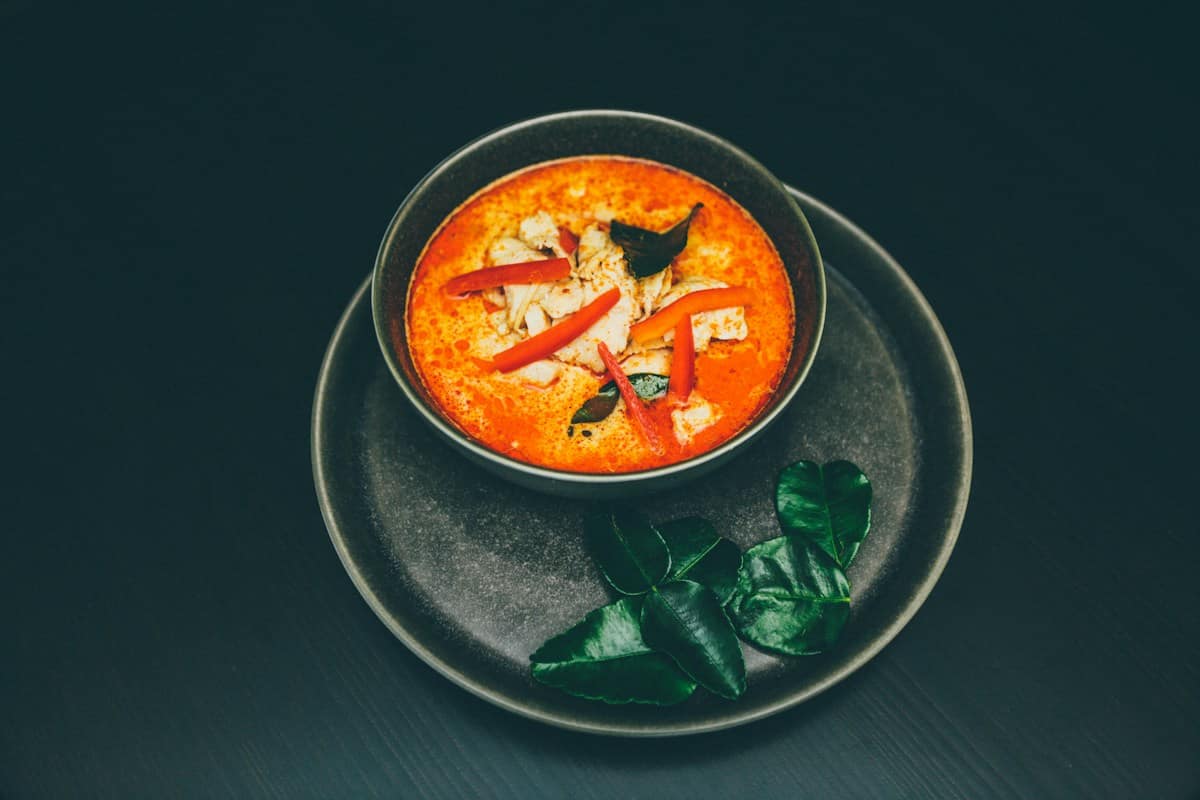
Few dishes on Earth capture the intoxicating harmony of Southeast Asian cuisine quite like authentic thai green curry (Gaeng Kiew Wan Gai). When cooked with time-honored technique, it presents a brilliant emerald sheen, a perfume of bruised lemongrass and Makrut lime leaves, and a palate that moves effortlessly from fiery green bird’s eye chilies to silky, velvety coconut cream with a lingering herbal sweetness. Yet far too many home cooks end up with a pale, curdled, watery soup that tastes more like boiled chicken in lukewarm coconut milk. Elevating green curry from a bland takeout shortcut to a Bangkok street-food masterpiece requires understanding fat emulsion separation and herbal thermal sensitivity.
By cooking the top layer of thick coconut cream until it physically “cracks” and renders its virgin coconut oil, frying the aromatic green chili paste directly in this rendered fat, and bruising delicate Makrut lime leaves and Thai sweet basil at the exact moment the burner is turned off, you unlock a depth of flavor that commercial jarred sauces simply cannot match.
The Culinary Science: Why Green Curry Curdles & How Coconut “Cracking” Works
Thai curry chemistry fundamentally differs from Western dairy roux emulsions. Here is the science behind authentic Bangkok wok technique:
- The Phase Inversion of Coconut Cream (“Cracking”): Unprocessed coconut cream is an oil-in-water emulsion stabilized by natural plant proteins. When you simmer the thick solid cream scooped from the top of an unshaken can over medium-high heat, water evaporates until the temperature exceeds 212°F (100°C). At this critical threshold, the proteins denature and coagulate, causing the emulsion to “break” or crack. Clear, shimmering coconut oil pools on the surface. Frying green curry paste in this hot coconut oil extracts lipid-soluble capsaicin, green chlorophylls, and volatile terpenes from galangal and lemongrass that water-based boiling can never release.
- Chlorophyll Oxidation vs. Thermal Shock: The vibrant green pigment in fresh Thai green chili paste (chlorophyll) rapidly degrades into dull olive pheophytin when subjected to prolonged boiling over 180°F. Searing your paste for only 2 to 3 minutes until fragrant, quickly adding succulent chicken thigh strips, and simmering gently (never rolling at a turbulent boil) preserves the luminous jade hue of the finished gravy.
- Thai Eggplant Osmosis & Bitterness Removal: Round Thai eggplants contain bitter solanine and high water content. Halving them and dropping them directly into simmering salted curry broth forces osmotic exchange: the eggplant sponges up seasoned coconut broth while expelling raw plant bitterness, transforming into tender, melt-in-the-mouth morsels.
- Palm Sugar & Fish Sauce Glutamate Balance: Authentic Thai flavor operates on a four-pillar sensory matrix: spicy (green chilies), salty/umami (fermented fish sauce), sour/herbal (Makrut lime & lemongrass), and sweet (unrefined coconut palm sugar). Adding palm sugar balances the pungent shrimp paste notes in the green chili base without turning the dish cloying.
The Golden Rules of Authentic Thai Green Curry
- Never Shake the Coconut Milk Can: You need separated layers. Use the thick white coconut cream cap on top for frying the paste, and the lighter watery coconut milk underneath for thinning the curry to perfect drinking consistency.
- Always Choose Boneless Chicken Thighs: Chicken breast dries out rapidly in simmering coconut milk and releases excess moisture that thins your gravy. Thighs stay succulent and enrich the broth with gelatin.
- Tear Makrut Lime Leaves, Never Chop: Tearing lime leaves by hand along the center spine ruptures microscopic oil glands, releasing explosive citrus perfume into the curry without tough fibrous strands.
- Submerge Thai Basil Off the Heat: Thai sweet basil (horapha) has an anise-licorice aroma that evaporates within 60 seconds of hard boiling. Stir the fresh leaves into the curry after extinguishing the flame, pressing them beneath the surface to steep like fine tea.
Essential Equipment for Thai Curry Masters
- Carbon Steel or Cast-Iron Wok: Distributes high radiant heat evenly across curved walls, allowing rapid coconut cream reduction without burning.
- Granite Mortar and Pestle: If pounding paste from scratch, granite crushing shears fibrous lemongrass and galangal cells rather than pureeing them watery like a food processor.
- Fine Slotted Spoon: Skims any impurities while keeping delicate chicken and vegetables intact.
Troubleshooting Common Thai Green Curry Mistakes
- Issue: The curry looks dull gray-brown instead of bright jade green.
Root Cause: Curry was boiled too long on high heat, burning the paste or oxidizing fresh herb chlorophyll.
Kitchen Fix: Keep the simmer gentle. To rescue dull color, blanch a handful of fresh spinach and Thai basil in boiling water for 15 seconds, shock in ice water, blitz with 2 tablespoons of coconut milk, and stir the emerald puree in right before serving. - Issue: The coconut milk curdled into tiny gritty white specks.
Root Cause: Low-fat “light” coconut milk was used, or the liquid was brought to a furious rolling boil with acidic lime juice.
Kitchen Fix: Always use full-fat premium coconut milk (such as Chaokoh or Aroy-D) with zero emulsifiers or gums. Never add fresh lime juice while cooking; serve lime wedges at the table. - Issue: The gravy tastes flat, overly sweet, and lacks depth.
Root Cause: Insufficient fish sauce umami and missing shrimp paste.
Kitchen Fix: Whisk in 1 teaspoon of good fish sauce (Red Boat or Megachef) and a pinch of salt. The savory funk will instantly counterbalance the coconut sweetness.
Complete Step-by-Step Recipe Card: Authentic Thai Green Chicken Curry
Prep time: 15 minutes | Cook time: 20 minutes | Total time: 35 minutes | Servings: 4 servings | Difficulty: Intermediate
The 15-Minute Weeknight Dinner Matrix
Stop wondering what to cook tonight. Get 20 modular, test-kitchen meals ready in 15 minutes or less from 5 pantry staples—with dual metric/US measurements & flavor grids.
Every recipe on QuickRecipeAI is independently developed, stopwatch-timed, and flavor-tested at least 3 times in home kitchens by Safi A. Calibrated with dual metric/US measurements and validated against USDA FoodData Central. Review Our Test Kitchen Standards & Testing Methodology →
Ingredients
- For the Curry Base:
- 1.25 pounds (600g) boneless, skinless chicken thighs, sliced against the grain into bite-sized 1/2-inch strips
- Two 14-ounce (400ml) cans premium full-fat coconut milk (unshaken, top cream separated)
- 3 to 4 tablespoons authentic Thai green curry paste (homemade or Mae Ploy / Maesri)
- 1/2 cup (120ml) low-sodium chicken bone broth or water
- 6 round Thai green eggplants, quartered (or 1 small Italian eggplant cut into bite-sized wedges)
- 1/2 cup sliced canned bamboo shoots, drained and rinsed in warm water
- 4 fresh Makrut (kaffir) lime leaves, center ribs removed and leaves torn in half
- 2 fresh red spur chilies or red bird’s eye chilies, thinly sliced on a bias for color
- 1 cup packed fresh Thai sweet basil leaves (Horapha)
- For the Authentic Seasoning Balance:
- 2 tablespoons premium Thai fish sauce (Nam Pla)
- 1 tablespoon finely shaved palm sugar (or coconut sugar)
- 1/4 teaspoon coarse sea salt
Step-by-Step Instructions
- Separate & Crack the Coconut Cream: Open the unshaken cans of coconut milk. Scoop 3/4 cup of the thick, solidified white coconut cream from the top directly into a wide wok or deep Dutch oven over medium heat. Reserve the remaining thin coconut milk for later.
- Render the Coconut Oil: Heat the cream, stirring occasionally with a wooden spatula. After 4 to 6 minutes, the water will sizzle away and the cream will separate into curds and shimmering pools of fragrant coconut oil.
- Fry the Green Curry Paste: Add the green curry paste into the cracked oil. Mash and fry the paste over medium heat for 2 to 3 minutes until intensely fragrant and small green oil beads bubble vigorously around the edges.
- Sear the Chicken Thighs: Add the sliced chicken thigh strips into the aromatic paste. Stir-fry for 3 minutes until the exterior of the chicken turns opaque and absorbs the emerald curry seasoning.
- Add Thin Coconut Milk & Simmer: Pour in the remaining thin coconut milk from both cans and 1/2 cup chicken broth. Bring the liquid to a gentle, bubbling simmer over medium-low heat. Do not allow a rolling boil.
- Incorporate Vegetables: Add the quartered Thai eggplants and drained bamboo shoots. Simmer gently uncovered for 7 to 8 minutes until the eggplants are tender when pierced with a fork but still retain their shape.
- Balance with Fish Sauce & Palm Sugar: Stir in 2 tablespoons fish sauce and 1 tablespoon shaved palm sugar. Taste the broth: it should be rich, spicy, pleasantly salty, and rounded with subtle sweetness. Adjust with a few drops more fish sauce if needed.
- Infuse Makrut Leaves & Basil: Add the torn Makrut lime leaves and sliced red chilies. Simmer for 1 minute. Turn off the heat completely. Immediately scatter the fresh Thai basil leaves over the wok and push them under the liquid with your spatula. Cover the pot with a lid for 2 minutes to let the herbal aromatics steam through the gravy.
- Ladle and Serve: Ladle the steaming jade green curry into shallow bowls, ensuring every serving has succulent chicken, tender eggplant, and a bright red chili accent. Serve immediately over fragrant steamed Jasmine rice.
Pro Chef Variations & Substitutions
- Thai Green Tofu & Vegetable Curry: Swap chicken for extra-firm tofu cubes (pressed, cubed, and lightly pan-fried in coconut oil) along with sugar snap peas and baby corn for a sensational vegan dinner. Use soy sauce or vegetarian mushroom stir-fry sauce in place of fish sauce.
- Jumbo Tiger Prawn Green Curry: Substitute chicken with 1 pound of peeled and deveined jumbo shrimp. Simmer the eggplant and bamboo shoots first, then add the shrimp during the final 3 minutes of cooking so they remain juicy and tender.
- Spicy Beef Green Curry (Gaeng Kiew Wan Nuea): Use thinly sliced flank steak or beef chuck. Sear quickly in the cracked paste for deep beefy richness that pairs exceptionally well with Thai holy basil.
Frequently Asked Questions
Can I substitute Italian sweet basil for Thai basil?
Italian sweet basil has a sweet, peppery flavor profile, whereas Thai basil has distinct notes of anise, licorice, and clove that withstand warm heat. In a pinch, Italian basil mixed with 2 fresh mint leaves and a pinch of ground star anise provides an acceptable alternative.
What can I use if I cannot find Makrut lime leaves?
There is no 1:1 substitute for the singular floral aroma of Makrut lime. However, grating 1 teaspoon of fresh lime zest into the pot off the heat provides bright citrus top notes.
How do I store and reheat leftover Thai green curry?
Store cooled curry in an airtight glass container in the refrigerator for up to 3 days. Reheat slowly in a saucepan over medium-low heat. Do not microwave on high power, which can cause the coconut fat to separate abruptly.
Nutritional Estimates (Per Serving)
- Calories: 460 kcal
- Protein: 32g
- Carbohydrates: 12g
- Fat: 34g
- Saturated Fat: 22g
- Sodium: 790mg
- Fiber: 3.5g
- Sugar: 5g

Written & Culinary Tested by Safi A
Verified Recipe AuthorSafi A is a recipe developer and the founder of QuickRecipeAI. Driven by everyday food science and fast, high-protein weeknight cooking, every recipe on this website is rigorously tested at least three times in residential home test kitchens to ensure dependable measurements, consistent cook times, and foolproof flavor.
More recipes to explore

Why Homemade Dal Makhani Tastes Chalky and Thin: The Slow 4-Hour Starch Gelatinization and Cultured Butter Emulsion Secret
⚡ Quick Recipe Jump to Recipe Print Recipe Revered across the Indian subcontinent and featured…

Why Pierogi Dough Tears and Filling Turns Bland: The Sour Cream Knead Elasticity and Farmer’s Cheese Sharpness Secret
⚡ Quick Recipe Jump to Recipe Print Recipe Across the homes, milk bars (*bary mleczne*),…

Why Mille-Feuille Layers Puff Unevenly and Collapse: The Weighted Blind-Bake Caramelization and Stabilized Diplomat Cream Secret
⚡ Quick Recipe Jump to Recipe Print Recipe In the grand windows of legendary Parisian…
[…] more authentic Southeast Asian and braising techniques, explore our step-by-step guides to Authentic Thai Green Chicken Curry and Tender Braised Beef Short […]
[…] more Southeast Asian noodle and curry masterpieces in our guides to Authentic Thai Green Curry and Authentic Thai Tom Yum […]