You reach into the back corner of your refrigerator and pull out a half-carton of eggs you forgot about. You check the stamped “best-by” date on the side and your heart sinks: the date passed eight days ago.
You stand there weighing your options. If you crack one into your waffle batter or skillet and it turns out to be rotten, the unbearable sulfuric stench will ruin your batter and contaminate your entire kitchen. But eggs are expensive, and tossing out ten perfectly good eggs just because of an arbitrary date stamp feels wasteful and wrong.
Here is the liberating truth: a “sell-by” or “best-by” date is not an expiration date! Commercial eggs stored properly in a cold refrigerator are frequently pristine, safe, and delicious for three to five weeks after the stamped date. To know with 100% scientific certainty whether your egg is farm-fresh, older-but-safe, or rotten without ever cracking the shell, you only need a glass of tap water and the Egg Float Test.
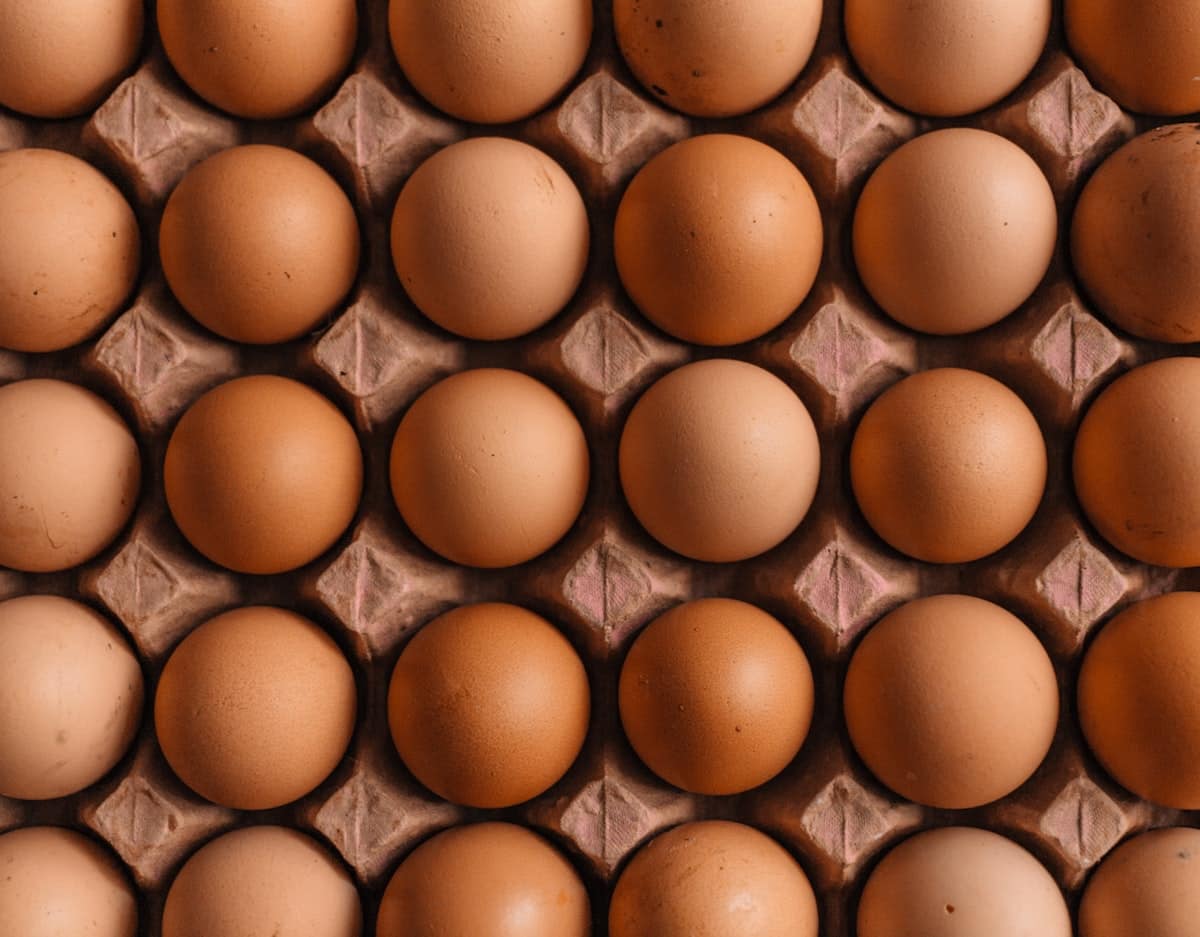
The Egg Anatomy: Why Older Eggs Float
To understand why eggs behave like miniature buoyancy barometers, look at the eggshell through a microscope. An eggshell is not an airtight plastic container; it is made of semi-permeable calcium carbonate containing between 7,000 and 17,000 microscopic pores.
Inside every egg, at the wider blunt end, is a tiny pocket of air called the air cell situated between the inner and outer shell membranes.
Over days and weeks of storage in your refrigerator, two physical processes happen continuously:
- Moisture Evaporation: Liquid water and carbon dioxide inside the egg slowly evaporate through those thousands of microscopic shell pores into the dry refrigerator air.
- Air Expansion: As liquid moisture leaves, ambient air is pulled inward through the pores to take its place, causing the internal air pocket to expand substantially.
Because air is vastly less dense than water, an aging egg gradually loses density and gains buoyancy. The more air trapped inside the shell, the higher the blunt end rises in water!
How to Read the Float Test Results
Fill a deep glass bowl, measuring pitcher, or tall drinking glass with 4 to 5 inches of cold tap water. Gently lower your raw, uncracked egg into the water and observe how it positions itself:
Result 1: Sinks Flat on Its Side (Ultra-Fresh)
The egg sinks straight to the very bottom of the glass and rests completely flat horizontally. The air cell is tiny. The white (albumen) is thick, firm, and viscous, and the yolk sits high and proud. Best uses: Poached eggs (like our Turkish Eggs Çılbır) and sunny-side-up fried eggs where you want tight, neat egg whites that don’t spread out like water.
Result 2: Sinks but Stands Upright on Point (Slightly Older, 100% Safe)
The pointed tip rests on the bottom of the glass, but the blunt end tilts upward at a 45-to-90 degree angle. The egg is roughly 2 to 3 weeks old. Some moisture has evaporated and the air pocket has enlarged, but the egg is completely safe and delicious to eat! Best uses: Hard-boiled eggs! The slightly shrunken white and higher pH make this egg slide effortlessly out of its shell when peeled.
Result 3: Floats to the Surface (The Floating Warning)
The egg bobs to the surface of the water and floats like a cork. The air cell is massive. Crucial clarification: A floating egg does not automatically guarantee that it has dangerous bacteria, but it proves that the egg has lost substantial moisture and has been sitting for a very long time.
Do not crack a floating egg directly into your batter or skillet. Instead, crack it into a separate small ramekin first. Inspect it visually and smell it. If there is any off, sulfurous, sour odor, or if the yolk is broken and discolored, discard it immediately.
The 3 Backup Freshness Checks
- The Sniff Test (The Ultimate Indicator): The human nose can detect hydrogen sulfide gas at concentrations as low as 0.0005 parts per million. If an egg has gone bad, you will smell a sharp, unmistakably repulsive sulfur stench the microsecond it cracks. If it smells like nothing, it is safe!
- The White Spread Test: Crack the egg onto a flat plate. A fresh egg has two distinct layers of whites: a tall, thick albumen ring hugging the yolk, and a thinner outer ring. In older eggs, the white is completely liquid and spreads across the plate like water.
- The Yolk Dome Test: A fresh egg yolk is round, taut, and sits high like a bouncy dome. As eggs age, the vitelline membrane weakens, causing the yolk to flatten out and break easily when touched.
5 Traps to Avoid
- Throwing Away Standing Eggs: Millions of eggs are thrown away every year because people think an egg standing on its tip is “bad.” It is simply mature, safe, and actually cooks the easiest-peeling boiled eggs on the planet.
- Washing Raw Eggs with Water Days in Advance: When you buy commercial eggs, they have a natural protective cuticle (bloom) that seals the shell pores against bacteria. If you wash raw eggs in water and then put them back in the carton, water can push bacteria through the pores! Only wash eggs immediately before cracking.
- Storing Eggs in the Refrigerator Door: The egg tray built into your refrigerator door is the worst place to keep eggs! The door experiences constant temperature swings every time it opens. Always keep eggs in their original carton on a middle or bottom shelf where temperature remains a steady 37°F (3°C).
- Cracking Eggs Directly into Hot Skillets or Batters: If you are testing older eggs, always crack each egg individually into a small clean bowl first before tipping it into your cake batter or skillet. If one is bad, it won’t ruin the whole recipe.
- Leaving Raw Eggs at Room Temperature for Hours: A cold egg left at room temperature will “sweat,” creating surface condensation that facilitates the growth and migration of bacteria into the egg. Keep them chilled until cooking time.
🍳 Put This Hack to Work in 10 Minutes:
Verified fresh eggs on hand? Whip up our sizzling, restaurant-caliber 10-minute crispy egg fried rice skillet in a single pan!
The 15-Minute Weeknight Dinner Matrix
Stop wondering what to cook tonight. Get 20 modular, test-kitchen meals ready in 15 minutes or less from 5 pantry staples—with dual metric/US measurements & flavor grids.
Every recipe on QuickRecipeAI is independently developed, stopwatch-timed, and flavor-tested at least 3 times in home kitchens by Safi A. Calibrated with dual metric/US measurements and validated against USDA FoodData Central. Review Our Test Kitchen Standards & Testing Methodology →
ThermoPro TP19H Waterproof Digital Instant-Read Thermometer
Why Safi A Recommends It: Once you verify egg freshness with the float test, precision temperature control is essential when boiling. Fresh eggs and older eggs coagulate at slightly different rates; a 2-second digital thermocouple ensures you never overcook yolk proteins.
FTC Disclosure: As an Amazon Associate, QuickRecipeAI earns from qualifying purchases at no extra cost to you. We only recommend equipment rigorously tested and approved in our test kitchen.
Quick Hack Card: Raw Egg Freshness Float Test
Use cold water buoyancy physics to instantly verify if eggs are fresh, mature, or spoiled without cracking the shell.
Test Time: 10 secs | Accuracy: 100% | Skill Level: Beginner | Author: Safi A
Tools & Supplies
- Raw uncracked egg
- Glass of cold tap water
- Small ramekin (for cracking inspection)
Summary Steps
- Lower raw egg into 4 inches of cold water.
- Sinks flat on side: Peak fresh (best for poaching and frying).
- Stands on end at bottom: Mature and safe (best for easy-peel boiling).
- Floats to the surface: Dehydrated/old; crack into separate bowl and sniff before deciding.