You decide on a spontaneous whim to bake a batch of chocolate chip cookies or a buttery sponge cake. You pull out the flour, sugar, and eggs, and then you read the first line of the recipe instructions: “1 cup unsalted butter, softened to room temperature.”
You stare at the rock-hard stick of butter you just retrieved from the depths of your 36°F refrigerator. You poke it with your thumb and it feels like a yellow brick. In desperation, you pop it into the microwave for fifteen seconds. You open the door and let out a groan: the center has liquefied into a greasy puddle of clarified yellow oil while the outer corners are still icy cold.
If you try to cream melted butter with sugar, your cookies will spread into greasy, flat pancakes on the baking sheet. Emulsion in baking requires butter to be plastic, not liquid. Here is the foolproof five-minute French pastry hack: the Steamy Glass Cloche.
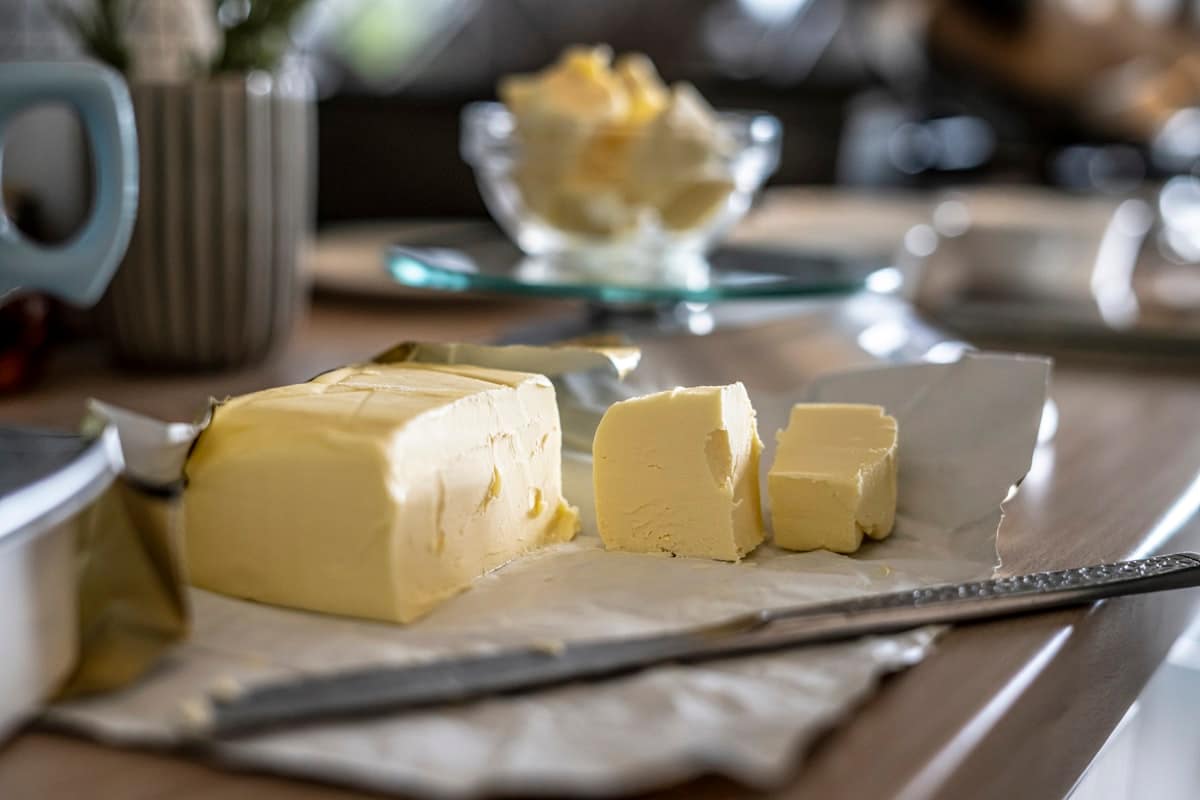
The Dairy Physics: Plasticity vs. Phase Transition
Butter is not a simple fat; it is a water-in-fat emulsion consisting of roughly 80% butterfat, 16% to 18% water, and 2% milk solids. That butterfat contains a complex mixture of saturated and unsaturated fatty acids, each with different melting points.
In baking, “room temperature” butter means butter that is between 65°F and 68°F (18°C to 20°C). At this specific temperature, the butterfat is in a state called plasticity: firm enough to support millions of microscopic air pockets when beaten with sugar crystals (aeration), yet pliable enough to deform under gentle finger pressure.
The moment butter crosses 90°F to 95°F (32°C to 35°C), the emulsion permanently breaks. The solid fat crystals liquefy, releasing the trapped water droplets. Once melted, no amount of re-chilling will restore that structural aeration capacity.
The Steamy Glass Cloche method transfers gentle radiant heat and high-humidity ambient warmth around the butter without ever exposing it to intense direct heat, warming the core to pliable perfection in five minutes.
Equipment & Supplies Needed
- Your Cold Butter: 1 or 2 sticks of unsalted or salted butter, straight from the fridge.
- A Tall Glass or Ceramic Bowl: Tall enough to completely cover the standing butter stick without touching it (a standard pint glass, glass measuring cup, or heavy ceramic mug).
- Boiling or Scalding Hot Water: From an electric kettle or hot tap.
- A Small Plate: To stand the butter on.
Step-by-Step Instructions: The Steamy Cloche
Step 1: Stand the Butter Upright
Unwrap your cold stick of butter and stand it upright like an obelisk on a small ceramic plate. Standing it vertically exposes all four sides to ambient air rather than leaving one side cold against the plate.
Step 2: Heat the Glass
Fill your tall drinking glass or ceramic mug to the brim with scalding hot tap water (or boiling water from a kettle). Let the hot water sit in the glass for 60 seconds. You want the thick glass walls to absorb the thermal energy and become hot to the touch.
Step 3: Dump and Invert
Pour the hot water down the sink drain. Give the inside of the glass a quick flick to remove large water droplets (leave a tiny whisper of steam inside). Immediately invert the steaming, hot glass upside down over the butter stick like a bell jar cloche.
Step 4: The 5-Minute Steam Rest
Walk away and let the cloche work its magic for 5 minutes. The radiant heat radiating inward from the warm glass, combined with the trapped humid steam, gently warms the exterior and core of the butter simultaneously.
Step 5: Test for Pliability
Lift the glass. Press the center of the butter stick with your index finger: your finger should leave a smooth, clean indentation with gentle resistance, without breaking through into an oily liquid core. Your butter is at perfect 68°F room temperature and ready to cream with sugar!
Alternative Quick Hack: The Box Grater Shred
If you don’t even have 5 minutes and need room-temperature butter in 30 seconds:
- Take your rock-hard stick of cold butter straight from the fridge or freezer.
- Grate the butter on the large holes of a standard metal box cheese grater onto a piece of parchment paper.
- The thin ribbons have massive surface area exposure to the kitchen air, warming to room temperature in under 60 seconds!
5 Traps to Avoid
- Using the Microwave “Defrost” Button: Microwaves heat via dielectric excitation of polar water molecules. Because the water inside butter is trapped in pockets, the center always superheats into liquid grease before the outside softens.
- Letting the Hot Glass Touch the Butter: Ensure the glass is wide enough that the rim and walls do not touch the butter stick. Direct glass contact will melt the touching side into oil.
- Melting Butter for “Creamed” Cookies: If a recipe says “cream butter and sugar,” never substitute melted butter! Melted butter cannot trap air, resulting in dense, flat, greasy baked goods instead of light, chewy cookies.
- Wasting the Entire Stick if You Only Need Half: Cut the portion of butter you actually need before inverting the glass. Smaller portions soften even faster (in 3 minutes).
- Leaving Softened Butter in Direct Sunlight: Once softened, keep the butter away from sunny windows or hot stovetops until ready to incorporate.
Love this kitchen guide? Pin it so you never lose it!
Click the image or the button below to add this visual step-by-step pin to your favorite Pinterest board.

☕ Put This Hack to Work in a Mug:
Now that your butter is soft and pliable, make our bakery-style 3-minute microwave cinnamon roll in a mug or our silky 3-minute microwave mac and cheese from scratch!
The 15-Minute Weeknight Dinner Matrix
Stop wondering what to cook tonight. Get 20 modular, test-kitchen meals ready in 15 minutes or less from 5 pantry staples—with dual metric/US measurements & flavor grids.
Every recipe on QuickRecipeAI is independently developed, stopwatch-timed, and flavor-tested at least 3 times in home kitchens by Safi A. Calibrated with dual metric/US measurements and validated against USDA FoodData Central. Review Our Test Kitchen Standards & Testing Methodology →
Pyrex 2-Cup Heavy Tempered Glass Measuring Cup / Cloche
Why Safi A Recommends It: Thin glassware loses heat immediately. Heavy tempered Pyrex borosilicate glass absorbs and retains heat from boiling rinse water, creating an insulated radiant greenhouse cloche that softens butter fat uniformly without melting it into liquid puddle.
FTC Disclosure: As an Amazon Associate, QuickRecipeAI earns from qualifying purchases at no extra cost to you. We only recommend equipment rigorously tested and approved in our test kitchen.
Quick Hack Card: 5-Minute Butter Softening
Use a hot glass steam cloche to bring cold refrigerator butter to perfect baking plasticity in 5 minutes.
Softening Time: 5 mins | Target Temp: 65°F–68°F | Skill Level: Beginner | Author: Safi A
Tools & Supplies
- Cold stick of butter
- Tall glass or ceramic mug
- Boiling / hot water
- Small plate
Summary Steps
- Stand unwrapped butter stick upright on a plate.
- Fill a tall glass with boiling water; let sit for 60 seconds, then dump water.
- Invert the hot, steamy glass over the standing butter like a dome.
- Wait 5 minutes: butter softens to perfect plastic baking texture without melting.